

Fitness Center Sound Insulation is of critical importance in spaces filled with high noise levels where many people often exercise simultaneously. The equipment used in fitness centers, music, and the noise generated by exercising individuals can significantly increase the sound level of the environment. This situation can affect both the comfort of the athletes and the disturbance of the surrounding people.
Fitness center sound insulation is a process carried out to control these noise levels and create a quieter environment. By reducing the sounds produced by the equipment in the fitness center and the exercising individuals, sound insulation minimizes the disturbance caused to the surroundings. At the same time, it ensures that the sounds within the interior spread more evenly, increasing the motivation and performance of the athletes. This insulation process is generally carried out with various products such as acoustic panels, sound-absorbing materials, and floor coverings. Acoustic panels absorb sound waves, reduce echo, and make the environment calmer. Floor coverings reduce the noise of falling weights and vibrations, keeping the noise under control.
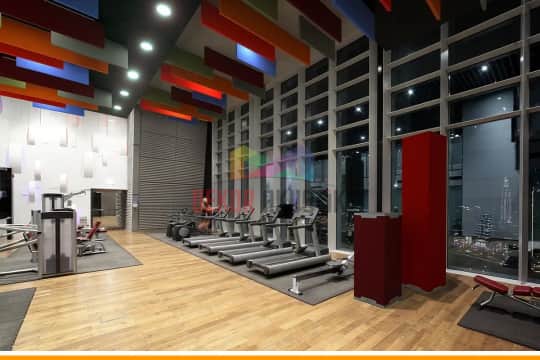

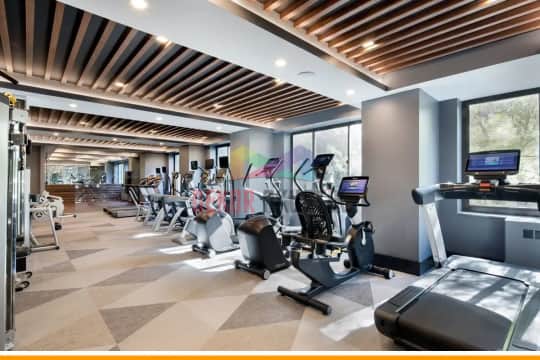
Materials Used in Fitness Center Sound Insulation
In fitness centers, controlling sound and preventing echoes both increase the quality of training and prevent disturbance in surrounding areas. Providing effective sound insulation in fitness centers boosts motivation during exercise and prevents sound from leaking outside. Barrier bondex foams, sound insulation barriers, acoustic foams, acoustic panels, acoustic pyramid foams, acoustic egg crate foams, and acoustic flat foams are the main materials used in fitness center sound insulation.
Barrier bondex foams are high-performance materials that prevent high levels of noise in fitness centers from leaking outside and absorb sound effectively. Thanks to their dense structure, these foams effectively absorb sound waves and do not allow external noise to penetrate inside. They also prevent the dispersion of sound within the hall.
Sound insulation barriers help effectively isolate low-frequency noises. For blocking machine sounds, floor vibrations, and the noise caused by falling weights in fitness centers, sound insulation barriers provide an excellent solution. These barriers are applied to walls, ceilings, and floors, increasing the overall sound insulation of the hall.
Acoustic foams are commonly used to absorb sound in fitness centers. Acoustic pyramid foams prevent echoes in the fitness center by directing sound waves and preventing them from scattering. Acoustic egg crate foams provide efficient sound absorption, improving the acoustics of the fitness center. Acoustic flat foams ensure the homogeneous distribution of sound, reducing the noise level in the room and creating a clearer sound environment.
Acoustic panels, when placed on the walls or ceiling of the hall, ensure that sound inside the hall is distributed properly. These panels improve the overall acoustics of the hall, eliminating disturbing echoes and noises during exercise.
Effective fitness center sound insulation both increases exercise efficiency inside the hall and prevents noise pollution in the surroundings. These materials strengthen the sound insulation of the fitness center, providing a more efficient and comfortable training environment. With a professional sound insulation application, noise and echo problems in fitness centers can be eliminated.
Fitness Center Sound Insulation Cost
The cost of fitness center sound insulation may vary depending on the type of materials used, the scope of the work, and the size of the gym. Fitness center sound insulation may cost only a few thousand dollars, while in a larger gym the process can be much more expensive. However, the comfort and quietness provided justify this cost.In conclusion, fitness center sound insulation is important to increase the comfort of visitors and reduce noise pollution. By using materials such as acoustic panels, sound-absorbing foams, acoustic barriers, and soundproof wall panels, fitness centers can be transformed into quieter and more comfortable environments. However, the cost of fitness center sound insulation varies depending on the scale of the work and the materials used.